






Evolution of WWE – Then vs Now: From Territory to Global Empire
 Evolution of WWE – Then vs Now How Wrestling Transformed
Evolution of WWE – Then vs Now: From Smoke-Filled Halls to Global Spectacle
It gets darker in the arena. 80,000 voices come together in anticipation as a single spotlight breaks through the fog. This is WWE’s modern spectacle – a global entertainment phenomenon where production values rival Hollywood blockbusters and athletes perform for audiences around the world simultaneously. However, if you go back seven decades, you’ll see a completely different scene: wrestling was mostly a local sport in smoke-filled halls in the Northeast, where regional territories operated under a gentleman’s agreement not to steal each other’s skills. One of the most amazing changes in sports history can be seen in the rise of WWE from its modest origins as the Capitol Wrestling Corporation to the worldwide sports entertainment powerhouse it is today.
This journey includes legendary characters who became cultural icons, innovative business strategies, generational changes in entertainment, and a continuous adjustment to shifting viewer habits. In addition to being about wrestling, the history of WWE is also about American entrepreneurship, bold risk-taking, and the development of a distinctive art form that combines storytelling and athletics. WWE’s development reflects larger cultural changes while continuously staying at the forefront of sports entertainment, from Bruno Sammartino’s record-setting championship reign that enthralled ethnic communities in the Northeast to The Rock and John Cena becoming Hollywood megastars.
The Territorial Foundation: Laying the Groundwork (1953-1982)
Capitol Wrestling Corporation: Lowly Origins
The Capitol Wrestling Corporation (CWC) was established on January 7, 1953, marking the beginning of what would eventually become WWE. Whether Vincent J. McMahon or his father Roderick James “Jess” McMahon founded the promotion is still up for debate, but one thing is certain: this small organization would lay the groundwork for a multinational conglomerate. The National Wrestling Alliance (NWA), a group of regional promotions that respected one another’s territories and acknowledged a single NWA World Heavyweight Champion who would travel between territories, was the organization with which the CWC operated. Although stability was guaranteed by this cooperative system, growth potential was constrained; this limitation would ultimately be lifted by the following generation.
The territory era was distinguished by its direct booking method and regional focus. According to historical analysis of the time period, “The WWWF was relatively conservative for promotions of its day; running its major arenas monthly rather than weekly or bi-weekly.” Programming usually featured a heel (villain) challenger versus a babyface (hero) champion. The heel would usually win the first match by countout or disqualification, allowing for a more brutal rematch in a Texas Death or steel cage match to end the feud. Later, more intricate storytelling would be constructed on top of this straightforward but powerful framework.
Evolution of WWE – Then vs Now: The WWWF Emerges: Sammartino’s Record Reign

In 1963, a dispute over the NWA Championship led McMahon and his partner Toots Mondt to break away from the NWA, creating the World Wide Wrestling Federation (WWWF) . This marked the first major step toward independence. On April 25, 1963, Buddy Rogers was awarded the new WWWF World Heavyweight Championship, but health issues led to him dropping the title to Bruno Sammartino just a month later on May 17, 1963 . This championship change would prove historic beyond anyone’s imagination at the time.
With the title held for seven years, eight months, and one day (2,803 days), Sammartino’s reign would go down in history as the longest continuous world championship reign in men’s wrestling. The WWWF solidified its reputation during this time by hosting big events at Madison Square Garden and Shea Stadium, where Sammartino faced off against rivals Pedro Morales and Larry Zbyszko in front of sizable crowds. The way that the promotion handled championships was telling: heel champions like Ivan Koloff and Stan Stasiak were only permitted to hold the title for a short period of time—less than a month—before handing it off to the next hero. Only babyface wrestlers were permitted to hold the title for an extended period of time.
Table: WWE’s Historical Name Evolution
| Time Period | Promotion Name | Key Figure | Business Model |
|---|---|---|---|
| 1953-1963 | Capitol Wrestling Corporation (CWC) | Vincent J. McMahon | NWA Member Territory |
| 1963-1979 | World Wide Wrestling Federation (WWWF) | Bruno Sammartino | Regional Northeastern Promotion |
| 1979-2002 | World Wrestling Federation (WWF) | Vince McMahon Jr. | National Expansion |
| 2002-Present | World Wrestling Entertainment (WWE) | Various Eras | Global Multimedia Empire |
The National Expansion: Going Coast-to-Coast (1982-1997)
Vision of Vincent K. McMahon
The biggest change in WWE history happened in 1982, when Vincent K. McMahon bought the company from his father and began to change the way wrestling was done. McMahon boldly broke with tradition by openly saying he wanted to challenge the current territorial system: “In the past, there were wrestling fiefdoms all over the country, each with its own little lord in charge. Each little lord respected the rights of the little lord next to him. There were no raids or takeovers allowed. There were probably 30 of these little kingdoms in the U.S. If I hadn’t bought out my dad, there would still be 30 of them, broken up and having a hard time. Of course, I didn’t owe anything to those little lords. This aggressive expansion philosophy would shape WWE’s approach for decades to come and make it the most important company in professional wrestling.
McMahon’s plan was complex. He got national TV deals that went beyond the usual Northeastern area, hired the best talent from competing promotions, and put a lot of money into production values that set WWE’s product apart from others in the region. This strategy involved a lot of financial risk, but in the end, it let WWE make a national product that could be marketed all over the country. The business left the NWA completely and became an independent national promotion that directly competed with the American Wrestling Association and other territories that were part of the NWA.
Evolution of WWE – Then vs Now: Hulkamania Runs Wild
The centerpiece of WWE’s national expansion became Hulk Hogan, who McMahon signed after he had gained mainstream exposure appearing in Rocky III as Thunderlips . With his charismatic persona, immense popularity, and catchphrase-heavy promos, Hogan became the perfect vehicle for WWE’s national ambitions. When he defeated The Iron Sheik for the WWF World Heavyweight Championship on January 23, 1984, it marked the beginning of Hulkamania and cemented Hogan as the face of the company’s explosive growth .
During the Golden Era of WWE, characters were bigger than life and appealed to a wide range of people, especially kids and families. People like “Rowdy” Roddy Piper, “André the Giant,” “Macho Man” Randy Savage, and Junkyard Dog became famous in pop culture. WrestleMania began in 1985 during this time. It was a mix of sports entertainment and celebrity involvement from people like Mr. T, Cyndi Lauper, and Liberace. This made it popular with people who weren’t regular wrestling fans. The Rock ‘n’ Wrestling Connection was WWE’s first big step into the mainstream of pop culture. It set the stage for the company’s future as an entertainment company first and an athletics company second.
Evolution of WWE – Then vs Now: The Attitude Era & Ruthless Aggression: Pushing Boundaries (1997-2008)
Monday Night Wars Revolution
WWE’s business strategy and creative direction were drastically altered by the Monday Night Wars competition with World Championship Wrestling (WCW). Through the mid-1990s, WCW’s Nitro routinely outperformed WWE’s Raw in terms of television ratings, forcing WWE to change or face going extinct. The outcome was the Attitude Era, a time of more daring material, nuanced characters, and narratives that challenged artistic conventions. Anti-heroes emerged during this time, especially Stone Cold Steve Austin, whose rebellious, defiant persona resonated with the shifting cultural landscape of the late 1990s.
The main plotline that propelled WWE to previously unheard-of levels of popularity was the corporate versus blue-collar dynamic between Mr. McMahon and Stone Cold. Dwayne “The Rock” Johnson also rose to fame during this time, becoming a crossover star thanks to his electrifying personality and captivating promotional material. More adult-oriented content, such as sexual plotlines, obscene humor, and heightened violence, defined the Attitude Era. These elements were criticized by some but resonated strongly with the 18–34 age group. The period reached its zenith when WWE finally overtook WCW in the ratings war, which paved the way for WWE to acquire its main rival in 2001 and take the lead in sports entertainment without a doubt.
Evolution of WWE – Then vs Now: Evolution of a Stable: Case Study in Character Development
Evolution was the most successful of the Ruthless Aggression Era’s emphasis on interesting characters and factions. This stable, which was established in 2003, aptly embodied its name by embodying “the past, present, and future of WWE all at once.” Randy Orton and Batista (the future), Triple H (the present), and Ric Flair (the past) made up the faction. As younger talent learned from seasoned veterans in both plot and reality, this clever pairing made for engaging storytelling.
At Armageddon 2003, when Triple H won the World Heavyweight Championship, Orton won the Intercontinental Championship, and Batista and Flair won the World Tag Team Titles, Evolution’s supremacy reached its zenith. Internal conflicts ultimately caused the faction to break up, first when Batista betrayed Triple H prior to WrestleMania 21 and then when Orton was expelled following his victory in the World Heavyweight Championship at SummerSlam 2004. Both Orton and Batista went on to become main event stars in their own right, proving WWE’s increasing skill in long-term narrative planning and character development. This fulfilled the stable’s original premise.
The Modern WWE Era: Global Entertainment Empire (2008-Present)
Business Transformations and Corporate Evolution

WWE’s modern era has been marked by major business changes that have changed the company’s structure and strategy. In 2014, WWE introduced the first 24/7 streaming network, which revolutionized how fans accessed its content and created a direct-to-consumer relationship that would become increasingly valuable. This move foreshadowed the industry’s broader shift toward streaming that would dominate the next decade. On September 12, 2023, WWE merged with Endeavor, the parent company of the UFC, to form TKO Group Holdings, a combat sports and entertainment powerhouse with WWE functioning as a separate division within the larger corporate structure.
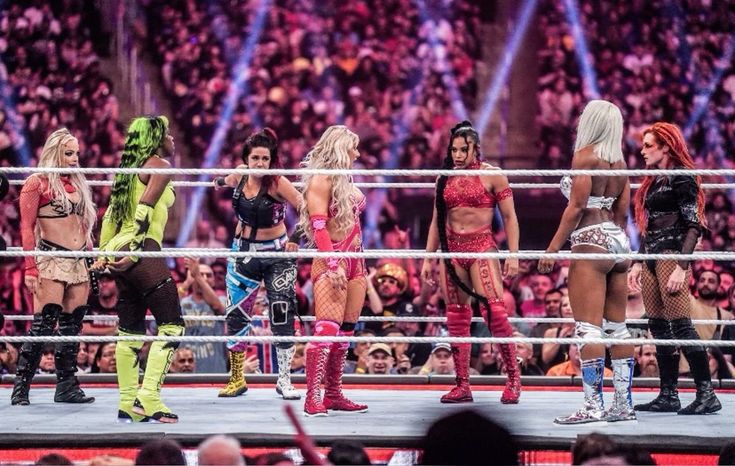
In January 2025, the WWE Network moved to Netflix in foreign markets while continuing to be available on Peacock in the US, marking the most recent change in WWE’s distribution strategy. Perhaps the biggest distribution agreement in WWE history, this move to the top streaming service in the world could expose its product to hundreds of millions of new viewers globally. This new era of streaming accessibility was symbolized by the 2025 Evolution event, which was the first all-women’s professional wrestling event to air on Peacock and Netflix.
Women’s Evolution and In-Ring Product
The Women’s Evolution, which saw female wrestlers move from short “Divas” matches to main-eventing pay-per-views like WrestleMania, is arguably the most well-known change in contemporary WWE. With women’s championship matches from Raw, SmackDown, and NXT as well as a main event where Naomi defeated Rhea Ripley and Iyo Sky for the Women’s World Championship after cashing in her Money in the Bank contract mid-match, the 2025 Evolution event served as an excellent example of this advancement. The seven-minute tag matches that used to define women’s wrestling in the WWE were a far cry from this.
Technically, the modern in-ring product has also changed, with wrestlers using more athletic storytelling, technical precision, and risky maneuvers than in the past. Performers are expected to be outstanding athletes, captivating characters, and media-trained spokespersons who can represent WWE on a variety of platforms. Matches frequently include scenes that would have been unheard of during the Golden Era. The company’s international hiring has introduced a variety of styles from around the globe, resulting in a hybrid sports entertainment format that combines European technical wrestling, Mexican lucha libre, Japanese strong style, and American storytelling.
People Also Ask
How has WWE’s business model evolved over time?
Since its territorial origins, WWE’s business strategy has undergone significant change. At first, the main source of income was the sale of tickets to live events in a particular area. Pay-per-view events and lucrative television deals were added as part of the nationwide expansion, generating multiple revenue streams. Another dramatic shift toward digital distribution and long-term media rights agreements has occurred in the modern era. The most recent development, which prioritizes worldwide streaming accessibility over conventional pay-per-view models, is the 2025 switch to Netflix in international markets. In order to cultivate talent methodically instead of depending on the conventional territorial circuit, WWE has also expanded through the production of movies, the licensing of merchandise, and the establishment of the WWE Performance Center.
What was the significance of WWE’s name changes?
Significant changes in the company’s identity and goals are reflected in WWE’s name changes. It broke away from the NWA and became an independent promotion in 1963 when it changed its name from Capitol Wrestling Corporation to World Wide Wrestling Federation. Modernization and brand simplification were signaled by the 1979 change to World Wrestling Federation. The 2002 rebrand to World Wrestling Entertainment came after a legal dispute with the World Wildlife Fund and emphasized the company’s entertainment focus over pure wrestling. From regional promotion to national powerhouse to international entertainment company with a wide range of interests outside the wrestling ring, each name change reflected an expansion of the organization’s vision.
How did the Women’s Evolution change WWE?
WWE’s portrayal of female athletes was drastically changed by the Women’s Evolution, which went from short matches that were mostly about appearance to featuring women as main event performers. The first women’s Hell in a Cell, Royal Rumble, and main event of WrestleMania matches, the elimination of the “Divas” championship in favor of women’s titles equal to the men’s, and the return of the all-women’s Evolution pay-per-view in 2025 after a seven-year break were some of the milestones that marked this change. With the 2025 Evolution including women’s championship matches from all three brands and showcasing the breadth of women’s talent across the roster, female wrestlers are now the main attraction at major events.
FAQs
Why did WWE change from WWF to WWE?
After losing a legal dispute with the World Wildlife Fund, which had owned the WWF trademark globally since 1961, WWE changed its name from WWF to World Wrestling Entertainment in 2002. The WWE acronym is the result of a settlement reached in the lawsuit that required the wrestling company to change its name. The company’s intention to highlight its entertainment offerings outside of wrestling, such as television production, motion pictures, and merchandise, was also reflected in the rebrand.
What was the first WrestleMania and why was it important?
Madison Square Garden in New York City hosted the inaugural WrestleMania on March 31, 1985. It was noteworthy because it included Mr. T, Cyndi Lauper, and Liberace and combined mainstream celebrity involvement with sports entertainment. This crossover appeal created a business model that would help WWE achieve national dominance and made the event the company’s flagship show, bringing previously unheard-of levels of media attention and audience reach. Decades later, WrestleMania is still the company’s yearly showcase event with the highest attendance.
How has WWE’s roster recruitment evolved?
Instead of mainly selecting players from local areas, WWE now conducts a systematic worldwide talent search. At first, wrestlers were from other promotions or the NWA circuit. Olympic athletes, collegiate wrestlers, and performers with a variety of combat sports backgrounds are among the athletes that WWE scouts today from all over the world. In contrast to the unofficial apprenticeship model of previous eras, the WWE Performance Center, which was founded in 2013, offers recruits cutting-edge training facilities where they hone their in-ring skills, character work, and media presentation.
What impact did the Netflix deal have on WWE?
A radical change in distribution strategy, WWE’s 2025 international market move to Netflix exposed its product to the vast global subscriber base of the streaming service. In addition to making WWE content more widely available abroad, this change may have drawn in new, casual viewers who might not have otherwise sought out traditional wrestling programming. Additionally, the agreement relieved WWE of the direct consumer marketing and billing obligations related to running its own streaming platform while guaranteeing the company’s income through licensing fees.
Conclusion: The Next Evolution
Over the course of seven decades, WWE has shown remarkable adaptability in its transformation from a regional promotion to a global entertainment force. From territorial member to national expansionist, from family-friendly product to edgy entertainment, and from television-focused company to streaming-era content provider, the company has undergone numerous transformations. From Vince McMahon Jr.’s national expansion to the adoption of streaming technology and global markets, each transformation required visionary leadership and a willingness to take measured risks. WWE’s history provides a case study on how to thrive in the face of demographic shifts, intense competition for viewers’ attention, and seismic shifts in entertainment consumption.
The next stage of WWE’s evolution seems to be centered on mainstream integration and globalization as the company enters the 2020s under the TKO Group Holdings umbrella, with Netflix serving as its international streaming home. WWE is in a position to further blur the boundaries between sports, entertainment, and pop culture thanks to a talent development system that produces the most diverse roster in history and distribution channels that reach previously unheard-of numbers of potential viewers.
WWE is probably going to keep adapting in the future by embracing new technologies, investigating untapped markets, and creating new stars who can appeal to the next generation of fans. As the promotion continues to change its presentation while preserving the essential components of gripping characters and dramatic athletic storytelling that have enthralled audiences for generations, history suggests that the only thing that will remain constant in WWE is change itself.