






Kawhi Leonard Salary Cap Investigation: A Comprehensive Analysis
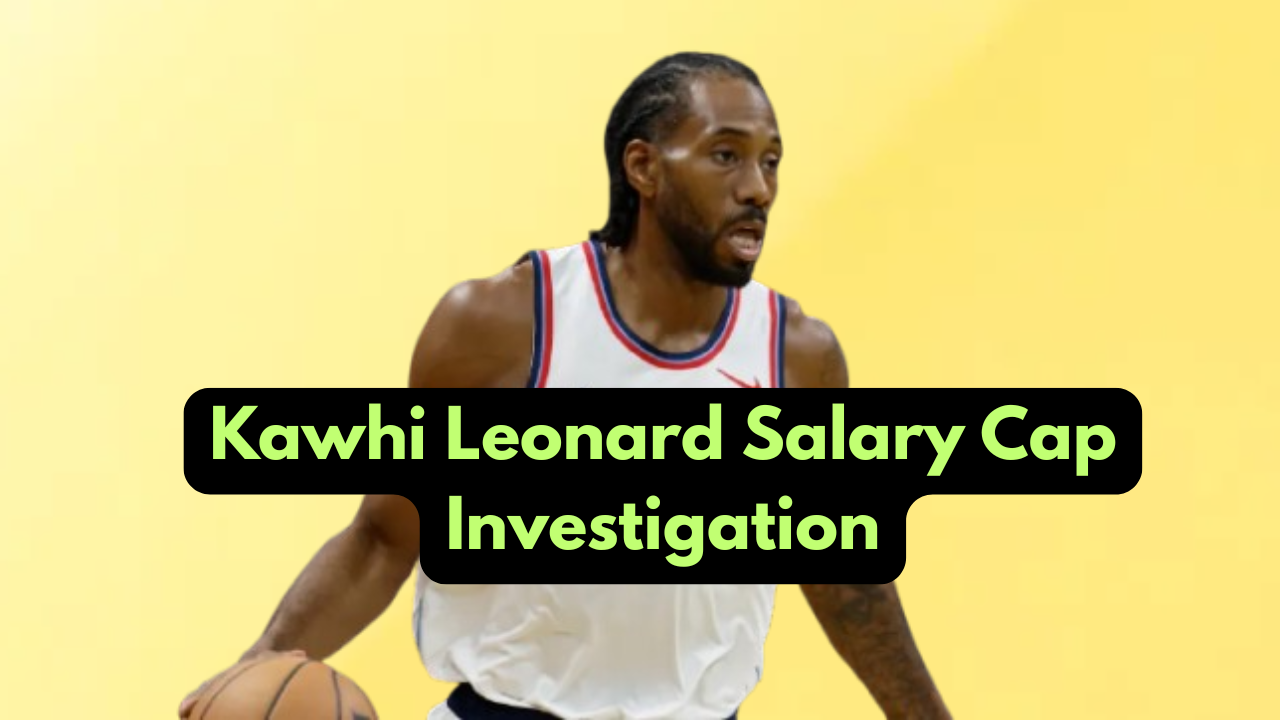 Kawhi Leonard Salary Cap Investigation A Comprehensive Analysis
Kawhi Leonard Salary Cap Investigation: A Comprehensive Analysis
The tranquility of the NBA was disrupted in late 2024 by sweeping accusations of an impending salary-cap transgression involving Kawhi Leonard and the LA Clippers. Specifically, the league is reviewing claims that owner Steve Ballmer arranged an elaborate transaction that funneled $28 million to Leonard via a purportedly dormant endorsement contract, thereby sidestepping the league’s prescribed salary cap prohibitions. Were the violations confirmed, the structure of the Clippers’ concluding roster would be thrust into the scrutiny once reserved for historical precedents of similar severity.
The ongoing probe has quickly escalated into the most consequential salary-cap matter to confront the league in the post-lockout landscape, and the stakes transcend the narrow interests of a single franchise. Competitive equilibrium hangs in the balance, as compliance allowances link franchise resources to long-term competitive viability. Furthermore, if the allegations prove substantiated, reallocation and redistribution precedents for player compensation and salary inflation may doubtless follow.
All-large salary-cap infringements long have been treated as violations of league foundational principle: the proposition that franchises should be allowed to develop success through perceptiveness, scalability and control of assets, rather than through an open-ended equation of net wealth. Concerns of damaging systemic inequities, and the cumulative psychological burden of witness elongation, have elevated national discourse beyond Fleet Street to Las Vegas, a geographic center once ancillary to the bulk league’s self-conception of integrity. Absence of resolution at this late point of the regular calendar would work further collateral instability into negotiations of both league and individual payroll program.
Central to the allegations of a salary-cap infraction involving Kawhi Leonard is a purportedly sophisticated “no-show” endorsement arrangement said to have disguised extra compensation beyond the NBA’s salary-cap parameters. Investigative documents assert that the design of this structure hinged upon the interposition of Aspiration Fund Adviser LLC, an environmentally focused investment advisor that reportedly received a prominent equity allocation from Steve Ballmer.
Under this scenario, Leonard is said to have executed an endorsement contract with Aspiration that expressly permitted negligible promotional activity, permitting him to collect significant remuneration while contributing minimal credibly presentational activity. Characterized by authorities as a “no-show” agreement, the contract consequently generated persuasive concern that the consideration exchanged—principally, substantial monetary transfers—lack genuine commercial underpinnings.
A sequenced overlap of Ballmer’s publicly linked $50 million equity stake in Aspiration and the player’s subsequent executed endorsement arrangement provides a lucid concatenated documentation trail that is reportedly central to the probes. The overall chronological alignment of the investments and the endorsement appears, according to analysts, to demonstrate a deliberate, calibrated passage of supplementary remuneration to Leonard that effectively evades inclusion on the official cap ledger of the Clippers franchise.
Such an arrangement would permit the franchise to preserve heightened roster flexibility while ensuring that its franchise player receives remuneration that otherwise would have accrued against the wage ceiling. The competitive upside from the maneuver could be pronounced, enabling the franchise to assimilate complementary talent or to sidestep financial penalties associated with the luxury tax threshold.
Legal and Financial Consequences
The cap-circumvention prohibitions embedded within the collective-bargaining agreement preclude precisely this brand of circumvention. The contractual strictures specifically forbid any mechanism by which teams, their principal owners, or allied entities supply remuneration to players through non-transparent channels that circumvent the wage-bill reconciliation process. If these assertions are substantiated, the penalties affixed to Leonard’s alleged failure of contractual disclosure stand to be substantial. The league retains the prerogative to levy financial penalties of up to $7.5 million, to nullify offending arrangements, to rescind selections in the player-evaluation lottery, and to execute any combination of retaliatory measures it may deem proportional. The league’s disciplinarians have consistently deployed punitive measures of this magnitude, framing cap-breach infractions as fundamental challenges to the equilibrium of competition it seeks to enforce.
Historical precedents alert that the NBA is accustomed to levying stringent sanctions when confirmed salary-cap improprieties emerge. The Minnesota Timberwolves surrendered a series of first-round selections for covert arrangements surrounding an incentive-laden pact with Joe Smith during the late 1990s, underscoring the league’s resolved intent to uphold salary-cap discipline.
Any affirmative recalibration of the cap that factors in the alleged endorsement income could expose the Clippers to a cascade of liability beyond the forfeiture of assets. Commendatory adjustments might entail retroactive assessments of the luxury tax exposure, corrective restatements of salary that shrink or defer guaranteed portions of contracts, and design limitations on forthcoming player acquisitions articulated in the league’s collective-bargaining framework.
Status and Future Course
The NBA’s chartered governance subcommittee summoned an inquiry in the wake of several incisive news pieces disseminating the rumored financing, mandating an independent counsel to process, scrutinize, and report on all pertinent documents, electronic exchanges, and accounting records congruent with the cited compensation.
The Clippers franchise, along with owner Steve Ballmer, has publicly disavowed wrongdoing, portraying Ballmer’s equity in the climate-focused venture Aspiration as a discrete, rational commercial move unconnected to Leonard’s commercial entrée. Analysts remain duly cautious, however, noting that the coordination of entity equity and player endorsement income elicits structural and chronological anomalies that warrant continued evaluative diligence.
Current estimated schedule for this matter remains opaque, yet past NBA inquiries of a comparable nature routinely extend over multiple months. Throughout this evaluation phase, the franchise continues its customary business operations, albeit under the psychosocial weight of an active inquiry, which evidently influences both internal morale and external opinion.
Outcome of this inquiry ought to furnish consequential guidelines for league governance of intricate cap-evasion tactics. Future implementation might encompass augmentations of analytical supervision and fortification of enforcement canons, to ensure equitable and transparent competitive balance.
The $28 Million Salary Cap Claim: Dissecting the Purported Remittance Schema
The Alleged Remittance Schema
The $28 million cap-affecting component tied to the 2019 free-agency evaluation of the player popularly designated as Kawhi Leonard constitutes, if substantiated, one of the most expansive purported circumvention stratagems on record within league annals. Investigative suspicion alleges a diverted capital flow from the business entity identified as Aspiration Fund Adviser LLC to the athlete, which evidently assumed the external guise of a marketing accord interpreted by oversight personnel as in essence disguised wage within the salary framework.

IMAGE SOURCE-GOOGLE.COM
Contemporaneous disclosures assert that the remittance branching sought to mask additional remuneration as usual commercial fully delineated transactions, yet in practical function it materialised as amplified recompense for competitive services rendered to the Clippers franchise. When analyzed as proportion of the athlete’s anticipated residual market valuation, stated decimal marker attests that the purported surge constitutes differentiation beyond errant administration and instead indexes deliberate elevation of the athlete’s total still broader financial parole.
The chronology of the purported payments is instrumental in assessing the operational dexterity of the alleged scheme. Analyses indicate that the disbursements were parcelled out across numerous fiscal cycles, appearing to align not only with Leonard’s contract renegotiations but also with the respective liquidity position of the Clippers’ salary cap, thereby adding chronological plausibility to the deception.
Conduitting the payments through Aspiration introduced successive firewalls between the franchise itself and the ultimately beneficial compensation to Leonard. Each tier of insulation layered commercial legitimacy upon the transaction, collectively diminishing the likelihood of red flags triggering typical league monitoring protocols. Such deliberate obfuscation is indicative of premeditated architecture engineered to elude league forensic examination.
Mechanics of Evasion
Illuminating the manner in which the purported $28 million sum eluded the anti-overage provisions necessitates a disaggregation of the nexus between Ballmer’s capital injection in Aspiration and the ensuing brand engagement directed to Leonard. The arrangement, as alleged, directed Ballmer to inject a material financial quantum, thereby endowing Aspiration with surplus liquidity to tender Leonard an endorsement of unprecedented scale.
The logical sequence bequeaths a veil of plausible deniability; Ballmer, by contending that his injection was purely valuation-driven, and Aspiration, by asserting that the compensation reflected Leonard’s endorsement premium, ostensibly preserve independent enterprise judiciousness. Nevertheless, the synchronicity of cash flows and the quantum of the transfers juxtaposed with the Clippers’ salary cap ledger impart a compelling narrative of orchestrated conformity, rather than coincidental commercial discretion.
Steve Ballmer’s $50 million injection thus far functions as a fulcrum in the circumvention analysis. Presuming the funds underwrote the lush Leonard endorsement, one notes that concurrence between the investment’s closure date and the promotional contract award stands out as either prescient capital allocation or premeditated fiscal choreography. Investigators must reckon with the possibility of pre-clearance that, while not formally documented, could betray a view of Leonard as both on-court and on-brand sine qua non prior to the cash disbursal.
Such conjuncture supplies another layer of evidentiary price in the NBA’s methodical inquisition. Legends of contemporaneous email and transaction metadata entrench a timeline that advantages both the pro and con hypothesis of circumvention. If the forthcoming analysis could isolate around to circumvent a will, that would cede a significant shadow clause illustration: constructing remuneration in disguise—beyond the ambit of a forensic due diligence—rather than effecting a plainly commercial transaction.
The original $28 million ceiling breach disclosure emerged through diligence-based journalism that exposed the interlocking fiscal vault of the implicateds. The murum provided both unrivaled insider perspective and a dependent blind layer of unreconciled documentary proof. The ensuing Cobra-report, composed by Pablo Torre, pivoted on whistle-coded informants with walking theses on the Clippers and Aspiration inner-territory. The scrutiny, by design forensic and guarded, adverted to literal cash-flows and intra-cabinet dialogues; had the source trail not disbursed with caveats disprovals could replicate forensic stress, a testimony and counter-testimony would converge of explicit despatch compatibility assertions.
Allegations submitted anonymously by club employees have revealed supplementary insights into the purported remuneration structure, specifying how the arrangement was alleged to operate on an operational level. Respondents reference intra-organizational conversations that scrutinized the endorsement arrangement’s distinctive composition and documented trepidations regarding the economic legitimacy of the transaction.
The corpus of materials currently subjected to scrutiny by NBA compliance officials is expected to encompass transaction-level financial statements, archived electronic correspondence, negotiated endorsement and service contracts, and key corporate reporting associated with both Ballmer’s equity infusion and Leonard’s promotional arrangement. Well-structured and data-rich financial arrangements will, by design, yield an extensive electronic and hard-copy evidentiary framework, thereby facilitating both interpretative and reconciliatory analyses.
Projected Cost to the Salary Cap
Were the purported $28 million charge to a single-season salary cap validated, the fiscal and strategic implications for the franchise’s competitive capital structure would have been profound. Such a charge would materially the franchise’s salary cap, thereby compressing the club’s strategic flexibility to reconfigure its player assets and possibly precipitating alternative player-acquisition scenarios.
A systemic assessment of how inconsistent accounting treatment of the $28 million charge redistributes not-for-profit obligations is necessary. Failure to capitalize the charge would have expanded the clubs ‘ usable cap, thus enabling the acquisition strategic latitude and reducing the club’s exposure to punitive luxury tax thresholds. Consequently, a reassessment of prospective injury discounts, player acquisition windows, and expected tax exposure implications is a central imperative in strategic roster modelling.
The purported compensation mechanism purportedly grants the Clippers strategic advantages that transcend Leonard’s immediate payroll. By excluding this remuneration from the official team salary-cap ledger, the franchise reportedly preserves heightened flexibility for roster design, which, in turn, may afford the ability to construct a more competitive squad than the salary cap matrices would conventionally tolerate.
The consequences, in turn, affect league-wide salary-management calculus. Should franchises suspect that rivals are manipulating the cap apparatus, heightened strategic creativity (or, alternatively, clamor for more rigorous sal вступ enforcement from the Commissioner’s Office) may soon follow.
Curry’s Appraisal of Leonard: A Considered Judgment by a Championship Peer
Consistency in Commentary
Stephen Curry has, with marked steadiness, acknowledged Kawhi Leonard’s stature as a peer of the very highest caliber. A commitment to calling Leonard an “all-time great” recurs in Curry’s lexicon whether the setting is a postmortem appraisal of a hotly contested, seven-game series or a more detached debate around the NBA’s pantheon. These judgements commend Leonard’s combined technical dexterity, spatial awareness, and situational intellect, elements that earn him a weighted place in the esteem of Curry and the wider fraternity of elite players.
Curry’s recent commendations of Leonard are striking in light of their playoff encounters when each has led their franchise as the marquee player, yet the Warriors guard has consistently spotlighted Leonard’s singular talents, including his elite defense and his ability to excel under duress.
Curry frames Leonard’s influence in broader terms, noting that the competition is enriched when athletes of his level elevate the standard in the NBA. Such observations are in keeping with Curry’s long-standing commitment to aesthetic and competitive integrity; they reveal an appreciation for the stylistic and strategic benchmark that the Spurs forward consistently provides.
Dominant on the court yet decorous off of it, the relationship between the two is grounded in acclaim rather than antagonism. Curry and Leonard, despite the tactical hostility of finals encounters, celebrate one another’s influences and accomplishments when the game clock is not expiring, suggesting that regard and competition are not mutually exclusive.
That pillar of respect was also apparent during the recent Team USA preparation period for the Olympics, when their anticipated co-leadership on the court allowed observers to witness an ongoing professional dialogue detached from franchise loyalty.
Leonard’s decision to withdraw from the national team because of lingering injury apprehension not only reshaped the composition of the Team USA roster, but also precluded the prospect of witnessing two of the league’s most storied competitors executing complementary roles rather than adopting the adversarial masks typically assumed in Finals play. Curry’s public and private reactions to the announcement were marked by an authentic blend of empathy and encouragement, signalling that, even at the elite zenith, camaraderie takes precedence over national aspirational portrayals. Their shared history, crystallized in Finals series that swung late by artful, divergent precision from Curry’s marksmanship and Leonard’s two-way virtuosity, has elevated the baseline admiration each holds for the other; the narrowness of victory deepens, rather than obscures, the measured acknowledgment of excellence. Furthermore, the rivalrous lens has always in any authentic, elite, professional environment always brought admiration not just for proficiency but for the unrelenting regimen that sustains proficiency amid continual attrition and psychological fatigue, thus the respect at stake in confrontation has often transcended the immediate series. Within the industry, professional leadership and media analysts alike put the league’s salary cap covenant before factored, generational matured public trusting mind of Curry, expressed a carefully calibrated alignment of equity, league sustainability, and personal maximum recompense. The nuanced discourse holds that absolute individual leverage must, for league-wide equilibrium, yield to formula governing promises of cup-rovers, mentorship applicabling board bank, and team-name legacy. Even elite reinforcement to personal revenue leverage thus ceding, for a fraction of the ecosystem’s carefully constructed symmetry, codifies competition inhibition as not a burden borne by discerning competitors but a prudent pact of uplift negotiations that allows legacy curiosity and certainty to migrate across same benchmarks of late dive-pairing wake.
Discourse surrounding player remuneration has advanced markedly in the last several seasons. High-profile athletes such as Stephen Curry are now publicly urging executives to ensure payouts reflect the substantial revenues the athletes help to produce for franchises and the league as a whole. This advocacy shapes how contemporaneous player collectives scrutinise salary-cap frameworks and their codification.
Curry’s arguments reveal an appreciation for the delicate equilibrium between individual reward and league-wide equilibrium. Recent remarks imply that while the maximisation of player pay is warranted, wholesale evasion of salary-cap protocols threatens the competitive equilibrium that undergirds the popularity of the NBA. Such balance is crucial, as violations of salary-cap directives threaten to distort comparative advantage and the reliability of contractual expectations.
When transgressions of cap directives surface, the resultant candidate-versus-candidate scrutiny is sharp. Colleagues within the player association are compelled to interrogate the implicit fairness of a landscape in which franchises are apparently able to subvert comparably enforced norms. This doubt, echoing beyond implicated franchises, potentially colors the courtroom of public opinion regarding the integrity of league overseers. Hence both equity and governance, as articulated by Curry, loom over current evaluative frames, warranting reconsideration by decision-makers.
Curry’s campaign for elevated player remuneration encompasses not only marquee contracts but also assurances for rotational and emerging talents who lack substantial bargaining leverage. Such a view demonstrates an appreciation of collective player solidarity during compensation deliberations. The effect is an explicit acknowledgement that an equitable salary inflation serves not only elite performers, but also the functional fabric of every roster. His interventions therefore phrase enhanced compensation as a collective imperative rather than as a mere personal gain. Concurrently, he analyses the salary cap’s intent of equitable competition but observes that the existing parameters may still under-value player productivity and career jeopardy. His public remarks propose marginally elevated salary thresholds that, in theory, sustain competitive balance whilst affording players a closer actuarial return on risk. It is an incremental yet forceful challenge to the assumption that equilibrium can only come at the expense of athlete compensation. These complementary arguments position Curry within an emerging cohort of elite players lobbying for expedited monetisation under current collective agreements while concurrently interrogating structural ceilings. The weight of this advocacy is amplified by Curry’s simultaneous status as a generational superstar and durable brand, allowing his critiques not only to be heard but listened to by ownership and management constituencies.