





The Attitude Era: How WWE Changed Forever in the 90s
 The Attitude Era How WWE Changed Forever in the 90s
The Unforgettable Revolution: How the WWE Attitude Era Redefined Professional Wrestling
On Monday evenings, there was a distinct energy in the air. The “channel change” was a phenomenon that would become legendary, with viewers switching between channels in living rooms across America. They were turning away from the polished production of WCW Nitro in favor of WWF Raw Is War’s unadulterated mayhem. This was the WWE Attitude Era, a revolutionary moment in sports entertainment that left a lasting impression on a generation and transformed an entire industry, not just a television program. The era, which was forged in the crucible of a desperate ratings war, was a confluence of gritty storytelling, anti-authoritarian sentiment, and legendary WWE wrestlers from the 1990s who rose to prominence in popular culture. The Rock electrified audiences with a raised eyebrow during that era, D-Generation X made fun of the establishment, and “Stone Cold” Steve Austin gave a corporation the finger. The World Wrestling Federation was saved from the verge of extinction and propelled to worldwide dominance by this adrenaline-fueled rebellion that pushed the limits of content, character, and controversy. This was not your grandfather’s wrestling. This is the tale of how WWE was irrevocably altered by the Attitude Era.
The Perfect Storm: Context and Catalysts for Change
One must first comprehend the desperation that preceded the revolution in order to comprehend it. The WWF was in crisis by the middle of the 1990s. The family-friendly, cartoonish “New Generation” era was struggling financially and creatively. Its once-unassailable brand was looking dated as the company reeled from a steroid scandal that had ensnared owner Vince McMahon. World Championship Wrestling, its rival, delivered the decisive blow. In 1995, WCW introduced Monday Nitro with Ted Turner’s financial support, competing against WWF’s main show, Monday Night Raw, in what was known as the “Monday Night Wars.”
The tactics used by WCW were harsh and successful. They signed well-known WWF stars like Randy Savage and Hulk Hogan, and their edgy New World Order (nWo) plot, which conflated reality and fiction, struck a deep chord with an audience that was getting older. Nitro dominated the ratings for 84 weeks in a row, costing the WWF viewers and revenue. The business was on the verge of going out of business. Vince McMahon made a crucial choice in this pressure cooker: he would create a new game if he couldn’t defeat WCW at their own. The WWF would shed its family-friendly exterior and produce a rawer, darker product that captured the rebellious spirit of the era.
The Architects of Anarchy: McMahon and Russo
Two visionaries with very different methods led the change. The ultimate promoter, Vince McMahon, rebranded himself on screen as “Mr. McMahon,” an evil boss who is tyrannical, self-centered, and cunning. This character’s reputation was solidified during the infamous “Montreal Screwjob” at the 1997 Survivor Series, a contentious, real-life betrayal of wrestler Bret Hart that McMahon used to give his villainous persona more depth and realism. The character of Mr. McMahon turned into the ideal antagonist for the time.
Head writer Vince Russo used a ground-breaking booking technique called “Crash TV” behind the scenes. Fast-paced, short-match matches, frequent backstage vignettes, startling angles, and a strong emphasis on sexual content, profanity, and violence were characteristics of this philosophy. Russo wanted to produce “must-see TV” that kept viewers guessing all the time with its heel turns, swerves, and worked shoots. McMahon’s leadership on screen and this high-risk, high-reward creative approach served as the blueprint for the chaotic success of the Attitude Era.
The Stars Who Defined a Generation
Without its legendary roster of WWE wrestlers from the 1990s, the Attitude Era wouldn’t have such a positive reputation. These were multifaceted anti-heroes whose personalities and motivations struck a deeper chord with the audience than the flat heroes and villains of the past.
“Stone Cold” Steve Austin: The Blue-Collar Outlaw

“Stone Cold” Steve Austin was at the center of the time. His renowned “Austin 3:16” promo at the 1996 King of the Ring, an improvised speech that made fun of his opponent’s religious beliefs and heralded his arrival as a new, rebellious force, marked the beginning of his rise to prominence. As a beer-drinking, middle-finger-flipping Texan who only wanted to beat up his boss, Austin’s character was the epitome of the anti-authority figure. The main plot point that propelled the company’s success was his epic feud with Mr. McMahon, which was based on Austin’s refusal to “conform to a corporate image.” Austin became the biggest star in the industry because each Stunner he gave to the chairman was a cathartic release for the audience.
The Rock: The People’s Champion
The Rock was the charismatic entertainer, if Austin was the outlaw. He remade himself as a cocky, quick-talking heel in the Nation of Domination after a failed debut as the polished Rocky Maivia. Despite his best attempts to stay a villain, his amazing microphone skills and ability to create memorable catchphrases (“Know your role!”) eventually made him a fan favorite. Austin’s main rival and a pop culture phenomenon thanks to his captivating promos and in-ring skills, The Rock’s matches at WrestleMania X-Seven and other events defined the climax of the era.
D-Generation X: The Jesters of Rebellion
D-Generation X, led by Triple H and including Shawn Michaels, X-Pac, The New Age Outlaws, and the ground-breaking Chyna, embodied the irreverent and mischievous spirit of the time. They were huge fan favorites because of their crotch-chopping, sophomoric humor, and defiance of authority. One of the most memorable stunts from the Monday Night Wars is their notorious “invasion” of a WCW Nitro broadcast, in which they drove an army jeep to the arena’s doorstep, aptly capturing the WWF’s newly discovered aggressive confidence.
Mankind and The Undertaker: Darkness and Depth
Characters like Mankind (Mick Foley) and The Undertaker contributed depth and darkness, while Austin and The Rock offered the popular appeal. The violent Cactus Jack, the tortured masochist, and the carefree Dude Love were just a few of the many characters that demonstrated humanity’s extraordinary range and willingness to put up with unimaginable physical suffering for the sake of narrative. He is remembered in wrestling history for his Hell in a Cell match against The Undertaker, in which he was thrown from the top of the cage. In the meantime, The Undertaker transformed from a supernatural mortician into the demonic head of the Ministry of Darkness, retaining a sense of power and mystery that enthralled viewers all through the era.
Table: Iconic Stables of the WWE Attitude Era
| Stable Name | Key Members | Role & Gimmick |
|---|---|---|
| D-Generation X | Triple H, Shawn Michaels, Chyna, New Age Outlaws, X-Pac | Rebellious, mischief-making anti-authority group |
| The Corporation | Mr. McMahon, The Rock, Shane McMahon, Big Bossman | The evil corporate authority figures |
| The Ministry of Darkness | The Undertaker, The Acolytes, Mideon | Satanic cult focused on dark rituals and corporate takeover |
| The Nation of Domination | The Rock, Faarooq, D’Lo Brown, Mark Henry | Militant African-American group addressing social issues |
Moments That Shook the World
Fans were riveted to their screens during the Attitude Era because of its memorable and frequently shocking moments.
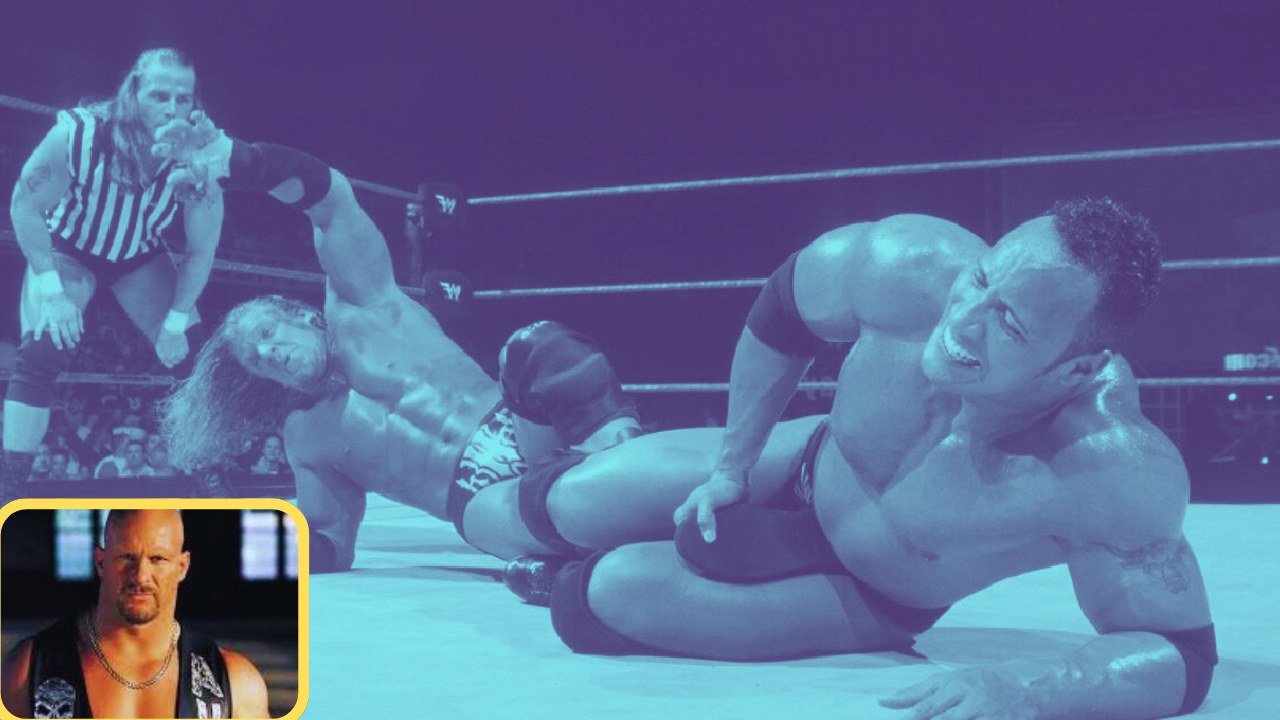
The 1996 promo for “Austin 3:16”: Many people believe that Steve Austin’s spontaneous tirade against Jake “The Snake” Roberts after winning King of the Ring marked the spiritual dawn of the era and laid the groundwork for his rebellious persona.
The Montreal Screwjob (1997): The Survivor Series controversy, in which Bret Hart was deceitfully disqualified from the WWF Championship, solidified Vince McMahon’s “Mr. McMahon” persona and demonstrated that anything could happen in the new WWF.
Mike Tyson and Steve Austin (1998): The WWF gained credibility and buzz after the “Baddest Man on the Planet” participated in the main event of WrestleMania XIV, which ultimately helped them win the ratings war.
Mankind’s Dude Love Made Its Debut (1997): One of the best examples of the imaginative, if frequently ridiculous, storytelling of the time was the bizarre revelation that Mankind, Cactus Jack, and Dude Love were all the same person.
The humorous “This Is Your Life” segment for The Rock (1999) was the highest-rated segment in Raw history, showcasing the amazing chemistry and attraction between The Rock and Mankind.
By The Numbers: The Stats of Success
The Attitude Era’s impact is not merely anecdotal; impressive business and television metrics show how successful it was.
Table: The Numbers Show the Attitude Era
| Metric | Detail | Significance |
|---|---|---|
| TV Ratings | Raw consistently scored in the 6.0-8.1 range . | These are numbers that dwarf modern professional sports finals, showcasing must-see TV. |
| Monday Night War Victory | WWF ended WCW’s 84-week winning streak in 1998 . | Marked the turning point where WWF’s “Attitude” overcame WCW’s nWo. |
| Pay-Per-View Buy Rates | Record-breaking buys for events like WrestleMania . | Demonstrated the audience’s willingness to pay for the product at an all-time high. |
| Merchandise Sales | “Austin 3:16” t-shirts became a cultural phenomenon . | Steve Austin was the top merchandise seller, making the company millions. |
| Acquisition of WCW | WWF purchased rival WCW in 2001 . | The ultimate victory, making WWF the undisputed king of American wrestling. |
The Final Bell: The End of an Era
Every golden age must come to an end, and the WWE Attitude Era was no different. By 2001, a number of factors came together to end the era. The most important was the March acquisition of WCW, which put an end to the Monday Night Wars and eliminated the pressure from competition that had stoked a lot of the WWF’s inventiveness. Additionally, the company’s programming was gradually being toned down due to sponsors’ increasing scrutiny of its edgy content.
WrestleMania X-Seven in April 2001 is frequently cited as the symbolic end of the era. In order to defeat The Rock in the main event, “Stone Cold” Steve Austin, the ultimate rebel, stunned everyone by shaking hands with Mr. McMahon, his arch-enemy. The main struggle that had characterized the Attitude Era came to an end with this heel turn, which saw Austin align with the authority he had fought for years. A new chapter for the company, later dubbed the “Ruthless Aggression Era,” was marked by the brand extension and the “Invasion” storyline that followed, which failed to leverage the potential of WCW’s roster.
People Also Ask: Your Attitude Era Questions Answered
Why is it referred to as the “Attitude Era”?
The WWF’s own branding and marketing were the source of the term “Attitude Era.” With the slogan “Get The ‘F’ Out” and a new “scratch” logo, the company was advertising a new product that was driven by “attitude.” In contrast to the family-friendly programming the WWF had previously produced, this change was a conscious attempt to appeal to a young adult audience that was drawn to edgier, more realistic entertainment. The phrase perfectly captured the rebellious, anti-authority, and confrontational nature of the show and its most prominent characters.
Which wrestlers from the Attitude Era were the most well-liked?
The two biggest stars were unquestionably “Stone Cold” Steve Austin and The Rock, despite the roster’s extreme depth. Due to his blue-collar rebellion, Austin became the most popular attraction and seller of merchandise. The Rock became a pop culture icon due to his charisma and skill with a microphone. Other important figures included Mick Foley in his many guises; The Undertaker, whose sinister Ministry persona was a mainstay of the time; Triple H, the shrewd leader of D-Generation X; and trailblazing artists like Chyna, who broke down barriers as a dominant female competitor alongside men.
What was the “Monday Night War”?
The WWF’s Monday Night Raw and WCW’s Monday Nitro, which aired concurrently from 1995 to 2001, engaged in a weekly television ratings battle known as the “Monday Night War.” Due to the fierce competition, both businesses were compelled to constantly innovate, which resulted in some of the most inventive and contentious eras in wrestling history. After initially lagging behind WCW for 84 weeks in a row, the war is credited with forcing the WWF to adopt its successful Attitude Era format. When WWF bought WCW, the war was over.
How did the Attitude Era change WWE’s storytelling?
WWE’s storytelling underwent a significant transformation during the Attitude Era, moving from a straightforward “good vs. evil” formula to a more intricate, character-driven storyline full of anti-heroes. It adopted “Crash TV” strategies, including quick cuts, backstage scenes, and unexpected turns. The boundaries between fiction and reality became increasingly hazy as storylines grew more mature, embracing themes of violence, sexuality, and current events. A classic worker-versus-boss tale, the Mr. McMahon vs. Steve Austin feud became the quintessential example of the time’s emphasis on rebellion against an unjust authority.
FAQs: Attitude Era Curiosities
Was shock value the sole focus of the Attitude Era?
Shock value played a significant role, but controversy alone did not account for the era’s long-term success. Fundamentally, it was about likable characters that viewers could relate to. Beyond the profanity and violence, fans were captivated by the compelling emotional narratives of underdogs like Austin challenging the system or The Rock’s ascent to fame.
Which rivalry from the Attitude Era was the best?
Without a doubt, the most significant and defining rivalry of the era was the Austin vs. McMahon feud. It was the main plot point that helped WWF win the ratings war. However, the Stone Cold Steve Austin and The Rock match series, which ended at WrestleMania X-Seven, is frequently regarded as the pinnacle of the era’s in-ring storytelling for pure in-ring and promo chemistry.
What was the treatment of female wrestlers during the Attitude Era?
One complicated and frequently criticized feature of the time was how women were portrayed. A large portion of the women’s division (then known as “Divas”) was originally promoted for sex appeal, even though there were gifted in-ring performers like Lita and Trish Stratus who appeared later in the era. Their plots, which focused more on sexuality than athletic competition, frequently included bra and panties matches, pudding matches, and valets.
Could we see another Attitude Era?
Very unlikely. The intense Monday Night War, a changing television landscape, and a pre-social media environment are the particular cultural and competitive circumstances that gave rise to the Attitude Era. It is unlikely that WWE will return to such edgy content given its current status as a global, publicly traded company with a family-friendly focus and different sponsor and shareholder expectations.
Why did the Attitude Era come to an end?
A number of factors contributed to the end of the era, including the elimination of the competition that drove it due to the purchase of WCW, the departure of major stars like The Rock and Stone Cold to Hollywood, and growing public opposition to the show’s violent and sexual content, which resulted in the implementation of TV content ratings and a deliberate decision to tone down the product for a new era.
In conclusion, a legacy that will never be forgotten
The WWE Attitude Era was a cultural revolution rather than merely a chapter in television history. It defeated its biggest competitor, prevented the World Wrestling Federation from going bankrupt, and established a model for captivating, character-driven storytelling that is still studied and appreciated today. Some of the most famous WWE wrestlers of all time came from the 90s, and their catchphrases and images are still instantly recognizable even now, decades later. Even though its content is now subject to greater scrutiny, its influence cannot be denied. By appealing to its audience’s rebellious nature and need for unadulterated entertainment, it created a strong, enduring connection with them. The Attitude Era demonstrated that breaking all the rules is sometimes necessary to win a title in professional wrestling. It was simply unforgettable, as the fans who experienced it will always remember.