




Top 10 Most Dominant WWE Superstars of the 2000s: Defining an Era
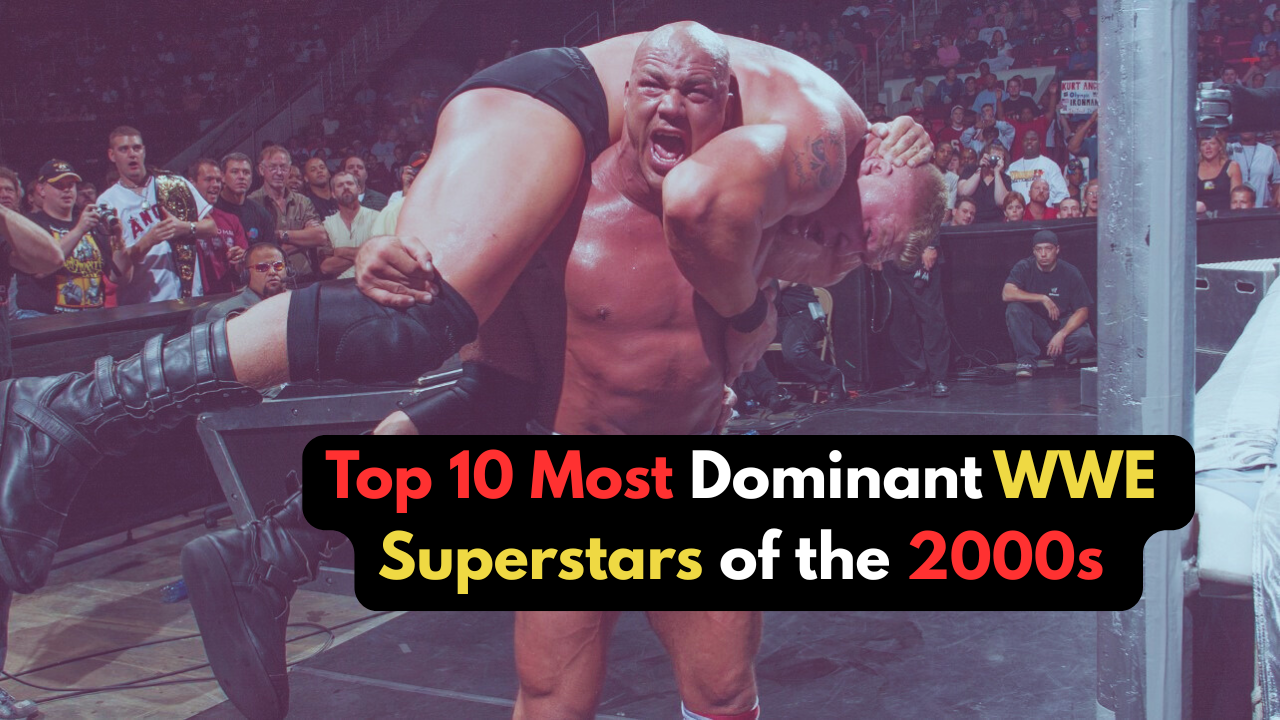 Top 10 Most Dominant WWE Superstars of the 2000s Ranked
Top 10 Most Dominant WWE Superstars of the 2000s: WWE’s Transformative Decade
Professional wrestling saw a significant shift in the 2000s, which started with the Attitude Era’s peak popularity at the end of the decade and progressed through the Ruthless Aggression era before settling into what would become the PG Era. After acquiring its last significant rivals, WWE was uncontested during this time, which compelled the company to produce new megastars internally rather than stealing established talent from rivals. In addition to collecting championships, the most prominent WWE stars of the 2000s were cultural icons who brought together great athleticism, captivating narratives, and an unbreakable bond with viewers around the globe. They participated in plots that enthralled millions of viewers, main-evented historic pay-per-views, and gave iconic promos that are still cited today. This article examines the top ten WWE wrestlers from this pivotal era in detail, judging them on their accomplishments, memorable moments, consistency over the course of the decade, and long-term influence on the business. These contestants shaped what it meant to be a top-tier superstar in the 2000s, from longstanding legends carrying on their legacy to up-and-coming talent making their mark.
Top 10 Most Dominant WWE Superstars of the 2000s: Defining an Era| The Unmatched Titans: Ranking WWE’s Most Dominant 2000s Superstars
1. The Undertaker
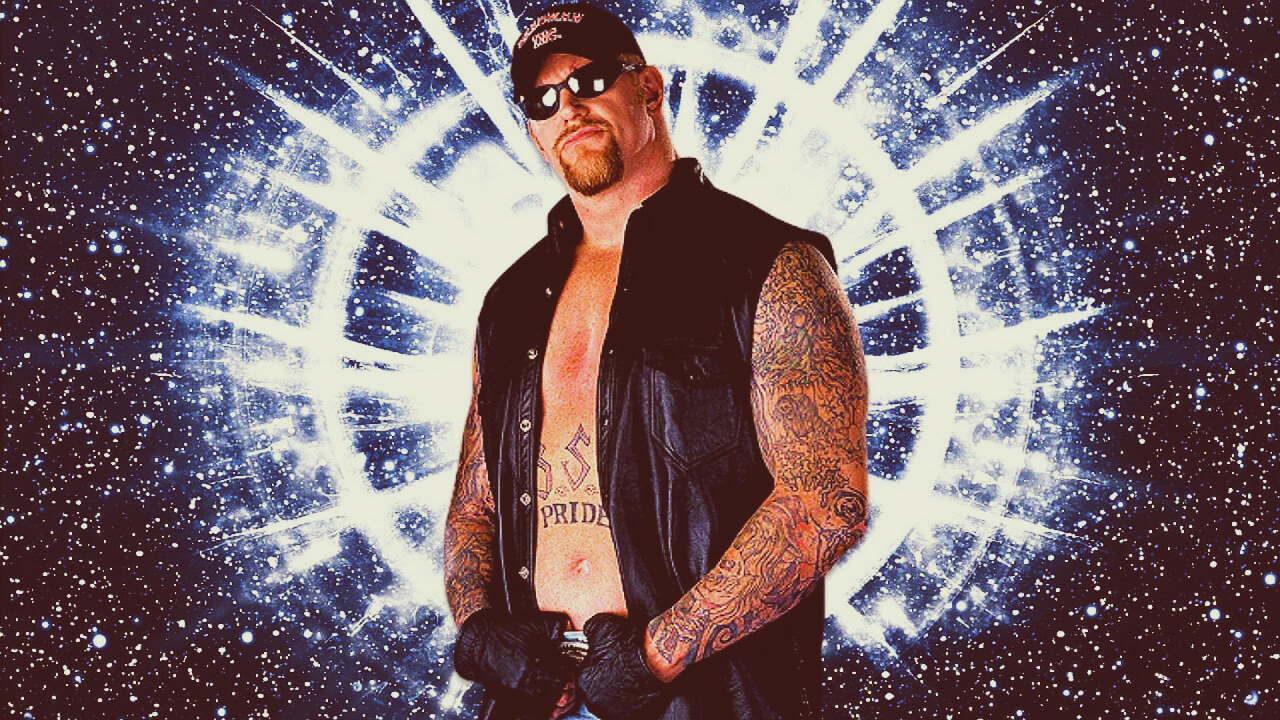
Even though The Undertaker’s legendary status was established in the 1990s, his enduring legacy continued to develop and solidify in the 2000s. By eschewing the supernatural Deadman persona for the biker-inspired “American Bad Ass,” which felt more raw and modern, he made a dramatic character change at the start of the decade. Before he spectacularly returned to his dark roots in 2004, this iteration demonstrated his amazing range as a performer by connecting with the audience in new ways. He turned the Showcase of the Immortals into his personal playground during the decade, delivering some of the greatest matches in history against Batista, Triple H, and Shawn Michaels. His WrestleMania Streak (20-0) became legendary.
- Pedigree of Championships: World Heavyweight Championship (2007, 2009), WWE Championship (2002)
- Epic battles with his “brother” Kane, Triple H, Batista, and Edge that lasted months and frequently characterized entire programming years are examples of decade-defining rivalries.
- Match Quality: Frequently produced five-star bouts, such as the first-ever Hell in a Cell matchup with Shawn Michaels and legendary matchups with Jeff Hardy and Kurt Angle.
- Character longevity: He was able to successfully reimagine his persona several times while preserving an air of unquestionable respect and authenticity.
The Undertaker’s supremacy was based on presence more than titles. The arena changed when his music became popular. He served as WWE’s last boss and the standard by which all others were evaluated. His status as the most powerful force of the 2000s is cemented by his ability to stay both relevant and feared despite ten years of changing tastes and roster changes.
Triple H

“The Cerebral Assassin” felt like he was in charge of everything, and he wasn’t just a competitor in the 2000s. Triple H, a founding member of Evolution, strategically elevated up-and-coming talent like Randy Orton and Batista while positioning himself as the seasoned kingpin occupying the throne. He held the World Heavyweight Championship for what seemed like an eternity during his Reign of Terror on Monday Night Raw in the early 2000s, routinely main-eventing pay-per-views and methodically defeating opponents. Triple H was the ideal antagonist that fans adored to despise because of his vicious in-ring style and unmatched microphone prowess.
- Five-time champion dominance WWE Champion and World Heavyweight Champion to begin the decade in 2000
- Faction Leadership: He coached up-and-coming talents while leading Evolution and controlling the World Title image on Raw for years.
- Main Event Stamina: Started numerous pay-per-events, such as WrestleMania 21 with Batista and WrestleMania X8 against Chris Jericho.
- Business Influence: He eventually rose to an executive position in real-life WWE management as his role behind the scenes grew.
Both in personality and in actuality, Triple H’s dominance was intellectual. He positioned himself as the focal point of the Raw brand for the majority of the decade and was aware of the business’s politics. He was one of the most significant and dominant best WWE wrestlers of his generation, and his matches were the main events of the year. His presence ensured importance whether he was a heel or a rare babyface.
John Cena

John Cena‘s rise in the 2000s was nothing short of spectacular, even though his peak popularity would come later. When he made his debut in 2002, audiences took to his “Doctor of Thuganomics” persona right away. Unlike anything else on the roster, his freestyle rap promos were new and edgy. He had developed into the “Face of the WWE,” the company’s franchise player, by the middle of the decade. Younger fans responded strongly to Cena’s “Never Give Up” motto, forging a bond that would support the company’s operations for many years to come. He was the company’s best-selling merchandiser and the man who would lead it into the PG Era thanks to his controversial but unquestionably successful transformation into a superhero.
- Statistical Dominance: Held the top spot in the WWE win totals for 2005 (139) and 2006 (140).
- Championship Accolades: He became a multi-time world champion in 2005 after winning the WWE Championship for the first time at WrestleMania 21.
- Marquee Rivalries: His titanic fights with Edge, Randy Orton, and Triple H characterized the second half of the decade.
- Mainstream Crossover: Started to broaden WWE’s appeal through media attention, TV appearances, and Hollywood roles.
There were two sides to John Cena’s dominance: the corporate champion and the rebellious upstart. Nobody could dispute his work ethic or his ability to connect with the audience, even though some fans grew weary of his cliched Superman comebacks. One of the most dominant WWE superstars of the 2000s, he was the undisputed star of the second half of the Ruthless Aggression era and was always at the top of the card.
Edge

In the 2000s, Edge’s journey was a master class in opportunity-seizing and reinvention. He began the decade with Christian as one half of one of the greatest tag teams ever, but he was destined to be a main event singles competitor. When he won the first-ever Money in the Bank briefcase on John Cena in 2006, it was a game-changer for WWE storytelling and gave rise to his “Ultimate Opportunist” persona. By pushing the limits of WWE’s content with his “Rated-R Superstar” persona, he honed his role as a top-tier villain. He became the most despised person in the industry almost immediately as a result of his real-life relationship with Lita, which fueled one of the most intimate and contentious storylines of the decade.
- Success in the Championship: Throughout the second half of the decade, he was the World Heavyweight Champion and a multiple WWE Champion.
- Tag Team Pedigree: Christian and Chris Jericho have both won numerous tag team titles.
- Firsts in History: The first Money in the Bank cash-in, which established a new WWE custom.
- Faction Leadership: Established the leading faction Randy Orton’s Rated-RKO
Cunning and risk-taking were the cornerstones of Edge’s dominance. He was frequently the smartest, even though he wasn’t always the strongest fighter. His matches, especially his TLC competitions and his series with John Cena and The Undertaker, were always amazing, and he was a lost art at getting real heat from the crowd. As one of the greatest WWE wrestlers of his generation, he rose from the tag team division to the pinnacle of the business.
Shawn Michaels

Shawn Michaels‘ entire run in the 2000s could have been summed up with the slogan, “What a comeback!” Following a four-year hiatus due to a severe back injury, “The Heartbreak Kid” made a comeback in 2002 and appeared to be in better shape than before. His 2000s persona was that of the “Showstopper,” an elderly veteran who could still perform classics on any given night, in contrast to his 1990s run, which was characterized by athletic arrogance. His matches became more emotionally charged and his in-ring narratives more nuanced. Even though he didn’t have as many titles as some of the other people on this list, his steady match quality was unrivaled.
- Iconic Returns: Overcame a career-ending injury to continue performing at the peak for eight more years.
- Candidates for Match of the Year: Won historic bouts against John Cena, Kurt Angle, and The Undertaker
- Faction Reunion: Joined forces with Triple H to form one of the most well-known acts of the decade.
- Storytelling Mastery: One of the most poignant moments in WWE history is his retirement match against Ric Flair at WrestleMania XXIV.
Randy Orton

In 2002, “The Legend Killer” made his debut as Evolution’s youthful, arrogant prodigy. He was a natural with his movie-star appearance and easy in-ring style. He set a record that stood for years in 2004 when he became the youngest World Heavyweight Champion in history. Ten years of main event prominence were made possible by this early success. Orton developed the RKO, a finishing technique that is arguably the most adaptable and eye-catching in the industry. He was a constant threat to any champion because of his sudden, explosive offense and cold, calculating demeanor.
- Young Dominance: At the age of 24, he became the youngest World Heavyweight Champion in WWE history.
- Signature Finisher: The RKO was chosen as 2006’s top finisher.
- Faction Success: A pivotal figure in Evolution who went on to lead Legacy.
- Main Event Fixture: Throughout the second half of the decade, it was regularly included in world title photos.
Pure, innate talent was the cornerstone of Randy Orton’s dominance. From his smooth moves in the ring to his unflinching promos, he made everything appear effortless. With equal conviction, he could portray a haughty rookie or a deranged veteran. Having already established himself as one of the greatest WWE wrestlers of the time, “The Viper” was a main event mainstay and a certain future Hall of Famer by the end of the 2000s.
Table: Statistical Snapshot of Top WWE Superstars (2000-2009)
| Superstar | World Titles Won (2000-2009) | Notable Yearly Win Record | Signature Finisher |
|---|---|---|---|
| John Cena | 8+ | 139 wins (2005), 140 wins (2006) | Attitude Adjustment |
| Triple H | 8+ | N/A | Pedigree |
| Randy Orton | 6+ | 112 wins (2004) | RKO |
| Edge | 6+ | N/A | Spear |
| The Undertaker | 4+ | 94 wins (2001) | Tombstone Piledriver |
| Batista | 4+ | 115 wins (2005) | Batista Bomb |
Batista

Similar to Randy Orton, his Evolution stablemate, Batista’s ascent to solo fame was one of the most remarkable tales of the decade. “The Animal” began as Triple H’s bodyguard and gradually gained popularity until the crowd called for him to step up. He won the World Heavyweight Championship at WrestleMania 21 after his flawlessly executed babyface turn against Triple H in 2005. Batista was a classic powerhouse with his intimidating body and explosive power moves, but what made him stand out was his sincere charisma and audience connection. His 2007 rivalry with The Undertaker resulted in a string of highly regarded bouts that demonstrated his remarkable development as a performer.
- Breakout Push: Won the World Heavyweight Championship at WrestleMania 21 after winning the 2005 Royal Rumble.
- Winning Record: Second only to John Cena with 115 victories in 2005
- Dominant Finisher: The Batista Bomb was a straightforward but extremely effective power bomb that won numerous battles.
- Brand Pillar: For a number of years, he was the main attraction of the SmackDown brand.
Batista’s power was evident and tangible. He had the appearance of a world champion. His matches were hard-hitting affairs, and his intensity seemed genuine. His presence and in-ring work propelled him to the top, despite his initial shaky microphone work. Securing his place among the most dominant WWE superstars of the 2000s, he, along with John Cena, represented the new generation of domestic WWE talent that would drive the company forward.
The Rock

It is impossible to overestimate The Rock’s impact throughout the 2000s, despite the fact that his full-time performing career was concentrated at the beginning of the decade. Headlining WrestleMania 2000 and the legendary WrestleMania X-Seven against “Stone Cold” Steve Austin, he started the decade as the company’s biggest star. His WWE appearances became special attractions as his Hollywood career took off, but every comeback felt like a significant occasion. His promos taught audience control, and his charisma was unparalleled. His feuds with Hulk Hogan, Bill Goldberg, and later John Cena were huge draws that went beyond the sport, even with his constrained schedule.
- Main Event Pedigree: Started the decade’s first four WrestleManias from 2000 to 2003.
- Impact on Culture: Effectively closed the gap between professional wrestling and popular entertainment.
- Iconic Promos: His verbal altercations with Triple H, John Cena, and Steve Austin are legendary.
- Part-Time Dominance: Demonstrated that his star power could drive ratings and sell pay-per-views even in the absence of a full-time schedule.
Pure, unadulterated star power was the foundation of The Rock’s dominance. Perhaps the most charismatic performer in wrestling history was him. He did good work in the ring, but what really made him a legend was his ability to communicate with and engage an audience. His move to Hollywood opened doors for other wrestlers, and his sporadic appearances over the course of the decade served as a continual reminder of his status as one of the greatest WWE wrestlers to ever enter the ring.
Rey Mysterio

For every small wrestler with big dreams, Rey Mysterio’s supremacy in the 2000s was a triumph. WWE fans were not accustomed to the master luchador’s high-flying lucha libre style when he made his debut in 2002. Despite his diminutive size, Mysterio consistently ranked among the most popular stars due to his amazing speed, inventiveness, and spirit of the underdog. He won the Royal Rumble and went on to win the World Heavyweight Championship at WrestleMania 22, an emotional triumph honoring his late friend Eddie Guerrero, making 2006 a historic year. This victory was historic because it demonstrated that a cruiserweight could win the WWE world title.
- In a world full of giants, the cruiserweight revolution helped give smaller wrestlers legitimacy.
- Achievements in the Championship: World Heavyweight Champion (2006), several Cruiserweight and Tag Team Champions
- Cultural Icon: He became well-known in pop culture and a favorite among younger fans due to his masks and fashion sense.
- Reliable Performer: Regardless of his position on the card, he consistently produced thrilling matches.
Breaking down barriers was central to Rey Mysterio’s dominance. His ceiling was never defined by his size. He compelled the company to include him in the main event photo with his talent, heart, and audience connection. He was one of the most adored and dominant best WWE wrestlers of the 2000s, inspiring a generation of fans and aspiring wrestlers by demonstrating that spirit and style could triumph over any physical disadvantage.
Kurt Angle

“The Olympic Gold Medalist” introduced a level of fierce competition and amateur wrestling legitimacy that was unparalleled. Angle made his debut in 1999 and became one of the most valuable players in the company in the early 2000s. He was extremely versatile due to his combination of underappreciated comedic timing and technical wrestling mastery. He might have a hilarious segment with Edge and Christian one night, and a five-star wrestling classic with Chris Benoit the next. His feuds with Shawn Michaels, Steve Austin, and Brock Lesnar are timeless. Angle’s devastating Ankle Lock finisher was voted the best in the WWE in 2003, demonstrating both its efficacy and his skill in the ring.
- Amateur Pedigree: He gave his persona more credibility by drawing on his actual Olympic experience.
- WWE Champion: Several times in the early 2000s.
- Finisher Effectiveness: In 2003, his Ankle Lock was named the top finisher.
- Workhorse Performer: Continually produced excellent matches on SmackDown and Raw.
Pure, unadulterated skill was the foundation of Kurt Angle’s dominance. He was arguably the most versatile performer of his time, able to dominate any kind of match against any opponent. Even though he left WWE for TNA in 2006 due to personal injury struggles, he had such a significant influence on the first half of the decade that he deserves a place on this list of the most dominant WWE superstars of the 2000s.
Comparative Analysis: Eras, Styles, and Legacies
There was a distinct ecosystem among the top WWE wrestlers of the 2000s. They served as a link between the more orderly, athletically oriented eras that followed and the chaotic, adult-oriented Attitude Era. The greatest performers of the 2000s frequently had to be both wrestlers and larger-than-life characters, in contrast to the megastars of the 1990s who were frequently both. Although John Cena was just as charismatic as The Rock, his in-ring performance was also closely examined. In addition to being a third-generation wrestler with extraordinary instinct, Randy Orton had the appearance of a classic superstar.
The definition of “dominance” also changed during this decade. Long-term title holding, as Triple H did in the early 2000s, was no longer the only goal. The Undertaker’s unbeaten WrestleMania record, which characterized him for decades, may be considered dominance. With two years in a row leading the team in victories, it might be John Cena’s statistical dominance. To get to the world title picture, Rey Mysterio might have to overcome the long-standing prejudice against smaller wrestlers. For fans who valued diverse styles and narratives, the 2000s were a richly textured and captivating time due to the diversity of routes to success.
The Verdict: A Foundation for the Future
The foundation for the current WWE product was established by the most prominent WWE superstars of the 2000s. After well-known icons like Steve Austin and The Rock left, they demonstrated that the company could successfully produce new megastars from scratch. All of the names on this list were first-ballot inductees, making the decade a breeding ground for future Hall of Famers.
In retrospect, what does this mean for WWE? This period made clear how crucial character investment and long-term storytelling are. Deeper emotional investment and more satisfying payoffs resulted from rivalries like Cena vs. Edge or The Undertaker vs. Batista being given months to develop. These wrestlers’ success demonstrated that viewers could relate to a broad range of characters, including the cerebral villain, the everyman hero, and the dark and supernatural. A decade that secured WWE’s existence and future prosperity by establishing a new pantheon of gods for a new generation of fans, the 2000s are remembered for their transformation, tenacity, and extraordinary talent.
People Also Ask
Who was the most winning wrestler in the 2000s?
Although winning championships is an important indicator, examining yearly win totals offers an additional intriguing viewpoint. Data indicates that during the second half of the decade, John Cena was the most consistently successful superstar. During his ascent to the position of franchise player for the WWE, he led the entire organization in wins in 2005 (139) and 2006 (140). Other noteworthy winners in particular years were Batista, who finished second only to Cena in 2005 with 115 victories, and Rob Van Dam, who dominated in 2002 and 2003. Cena’s status as the mainstay and leading star of WWE during the Ruthless Aggression era is highlighted by this statistical dominance.
What defined the “Ruthless Aggression” era?
In the 2000s, the Ruthless Aggression era—roughly from 2002 to 2008—was the pivotal time for WWE. When The Rock and “Stone Cold” Steve Austin, the main attractions of the Attitude Era, cut back on their schedules, it became necessary to find new stars. The period was named after Vince McMahon’s now-famous advertisement urging John Cena to display more “ruthless aggression.” This era was marked by a greater focus on technical skill and in-ring athleticism, as demonstrated by athletes such as Edge, Brock Lesnar, and Kurt Angle. A new generation of the top WWE wrestlers was given the chance to shine and take center stage when the brand extension was introduced, dividing the roster between Raw and SmackDown.
Why is The Undertaker’s 2000s run so significant?
Because it turned him from a major star into a living legend, The Undertaker’s run in the 2000s is noteworthy. Although he was already considered a legend in the 1990s, his unbeaten streak at WrestleMania transformed from an odd anecdote to the most coveted award in sports entertainment in the 2000s. His reputation for competing in high-profile, eye-catching matches was solidified by matches like his Hell in a Cell classic against Triple H at WrestleMania X-Seven and his vicious matches against Brock Lesnar and Edge. His reputation as possibly the most respected person in the business was further cemented by his successful transformation from the “American Bad Ass” biker to the supernatural “Deadman,” which showed remarkable character range and a profound awareness of his own changing legacy.
How did John Cena become the face of WWE?
John Cena’s charisma, connections, and corporate support all worked together to make him the face of WWE. His distinctive “Doctor of Thuganomics” persona initially attracted notice, and he used freestyle rap promos to differentiate himself from the crowd. WWE management could tell he was a future star because of his genuine charm and obvious connection to the live audience. The torch was formally passed when he won the WWE Championship for the first time at WrestleMania 21 in 2005. Cena became the company’s top merchandise seller and the undisputed face of the brand for the following ten years as a result of WWE’s full commitment to him as their top guy and his “Never Give Up” mantra, which struck a powerful chord with the important kid and family demographic.
FAQs
Who had the best finishing move in the 2000s?
Randy Orton’s RKO stands out in terms of effectiveness, popularity, and iconic status, though this is very subjective. Its versatility and unexpected hit made it one of the most thrilling moves in wrestling, and it was chosen as the best finisher of 2006. Stone Cold Steve Austin’s Stunner, with its pure pop and iconic sell jobs from Vince McMahon and The Rock, and The Undertaker’s Tombstone Piledriver, with its historic potency, are also strong contenders.
Was Stone Cold Steve Austin still dominant in the 2000s?
In a different way, yes. Although “Stone Cold” Steve Austin peaked in the late 1990s, his impact persisted well into the 2000s. He was a key character in the Invasion plot and won his last WWE Championship in 2001. However, following his iconic match with The Rock at WrestleMania X-Seven, injuries forced him into a part-time role and ultimately led to his in-ring retirement in 2003. His star power remained enormous, and his occasional appearances were always significant television events, even though his full-time dominance waned.
Which tag team was the most dominant in the 2000s?
D-Generation X (Triple H & Shawn Michaels) was the most consistently dominant tag team of the 2000s, even though the early part of the decade was defined by iconic groups like The Hardy Boyz, Dudley Boyz, and Edge & Christian. They became a major attraction for WWE and a ratings powerhouse after reforming in 2006. They were positioned as a top act on Raw and won the World Tag Team Championship. They feuded with the likes of Rated-RKO and The Spirit Squad, demonstrating that a reunited DX was a powerful force in the second half of the decade.
How did WWE’s business change during the 2000s?
WWE’s business strategy changed a lot. The conclusion of the Monday Night Wars and the Attitude Era’s record profits marked the beginning of the decade. After going public, the business started to diversify its revenue streams by producing movies, selling home videos, and stepping up its international merchandise licensing strategy. Built on the shoulders of its most dominant WWE superstars of the 2000s, WWE secured lucrative television rights deals and expanded its international presence, laying the groundwork for the global media empire it would become, even as domestic television ratings gradually fell from their Attitude Era highs.
Why did Brock Lesnar not make the top 10?
Incredibly brilliant but far too brief was Brock Lesnar’s first stint in the WWE. From his 2002 debut until his departure in 2004, “The Next Big Thing” was incredibly dominant. He won the WWE Championship and had renowned feuds with The Rock, Kurt Angle, and The Undertaker. But he just wasn’t there for most of the decade because he chose to leave WWE to pursue a career in the NFL and then the UFC. Although his two-year tenure was historic, it wasn’t enough to overshadow the ten-year effects of the other members of the list for a list that focused on consistent dominance throughout the 2000s.